Every construction project depends on the stability of the soil beneath it. Compromised soil compaction can lead to cracks, uneven settlement, and costly rework that can delay timelines and increase expenses. A Field Density Test provides critical insight into soil conditions, ensuring that foundations, roads, and structures are built on secure ground. Contractors, engineers, and developers across the Philippines rely on accredited testing laboratories to deliver precise data that guides project decisions. Inch-On Materials Testing Laboratory, a DPWH-BRS accredited facility, delivers trusted Field Density Test services following ASTM and AASHTO standards to guarantee quality, safety, and long-term stability.
What is Field Density Testing
A Field Density Test is a method used to determine the in-place density and moisture content of compacted soil at a construction site. Proper soil compaction is essential to prevent settlement and structural failure. By assessing soil density, engineers can verify that the site meets project specifications and complies with regulatory standards. The test is a key step in construction quality control, providing actionable data that ensures safety and reliability. Methods commonly used for Field Density Test include sand cone tests, nuclear gauge tests, and rubber balloon methods, all calibrated to international standards for accuracy and consistency.
The Field Density Test Process: Step by Step
Preparing the Site
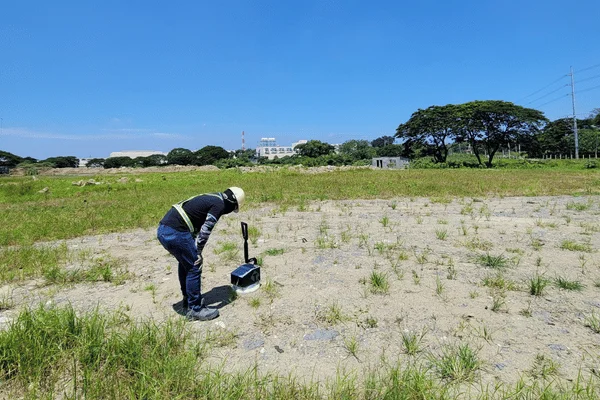
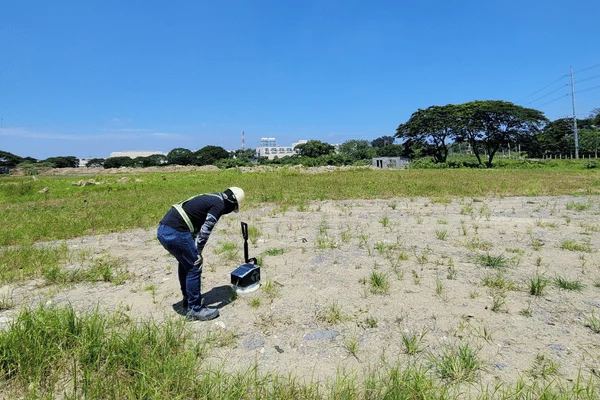
Proper preparation is crucial for accurate Field Density Test results. The testing area must be level, free of debris, and representative of the soil conditions where construction will occur. Technicians may excavate a small test pit or prepare the surface to measure soil compaction effectively. Site preparation ensures that results reflect the true density and moisture content of the soil and provides a reliable basis for subsequent construction decisions.
Conducting the Test
During the Field Density Test, technicians apply standardized procedures to measure how compacted the soil is. The sand cone method involves filling a calibrated cone with sand to determine the soil’s density. The nuclear gauge method uses a small radioactive source to measure density and moisture content, while the rubber balloon method calculates density based on displaced water volume. These methods follow ASTM and AASHTO standards, guaranteeing accuracy and reproducibility. Technicians record results carefully to produce actionable data that informs construction planning.
Interpreting Results
The data from a Field Density Test shows whether soil compaction meets the target density and moisture levels specified for the project. Engineers can identify areas that require additional compaction or other corrective measures. Proper interpretation ensures that foundations, pavements, and other structural elements rest on soil that can support their load safely. Results are typically documented in a report that contractors and project managers can use for decision-making, regulatory compliance, and quality assurance.
Importance of Field Density Testing
Soil that is not adequately compacted poses serious risks to any construction project. Poor compaction can lead to uneven settling, foundation cracking, pavement failure, and costly repairs. Conducting a Field Density Test mitigates these risks by verifying that the soil can safely support structures, roads, and foundation piles. It also ensures compliance with DPWH-BRS regulations and national construction standards. Using properly compacted soil reduces maintenance costs and increases the lifespan of a structure, making Field Density Test a vital investment for every construction project.
Benefits of the Field Density Test include ensuring structural safety, confirming soil load-bearing capacity, identifying potential weak spots, and maintaining regulatory compliance. Contractors can plan construction phases with confidence, knowing that the foundation is verified and reliable. Long-term consequences of skipping or ignoring soil testing can include project delays, structural defects, and additional costs that could have been avoided with early detection through FDT.
How Inch-On Materials Testing Laboratory Performs Field Density Testing
Inch-On Materials Testing Laboratory has built a reputation for delivering dependable Field Density Test services across the Philippines. Accredited by DPWH-BRS, the laboratory follows strict ASTM and AASHTO standards to maintain accuracy and consistency. Experienced technicians conduct site evaluations using industry-standard methods, ensuring that soil conditions are precisely measured.
The laboratory applies a proven quality control workflow: Proctor Test → Field Density Test → California Bearing Ratio (CBR). This sequence validates soil strength and compaction before construction proceeds, allowing engineers to make informed decisions and maintain structural integrity. Inch-On also provides detailed reports that document testing procedures, results, and recommendations for site improvement if necessary. These reports are essential for contractors, developers, and engineers to ensure projects remain compliant and secure.
Field vs Laboratory Testing: When Each is Needed
Field Density Test is conducted directly on the project site, providing real-time data about soil conditions under actual field circumstances. Laboratory testing, on the other hand, analyzes soil and construction materials under controlled conditions to assess properties such as compressive strength, moisture content, and particle size distribution. Both testing types are complementary and essential for thorough quality control.
Field testing ensures that compaction meets site-specific standards, while laboratory testing verifies the consistency and quality of materials before they are used in construction. Combining both approaches allows projects to maintain high safety standards, comply with regulations, and reduce the risk of structural issues. Inch-On Materials Testing Laboratory offers both field and laboratory services, giving clients a complete solution for soil and material testing.
Takeaway
Conducting a Field Density Test is a critical step for any construction project. It provides accurate, reliable data on soil compaction and moisture content, helping prevent structural failure and costly rework. Using a DPWH-BRS accredited laboratory such as Inch-On ensures that testing meets recognized standards, following ASTM and AASHTO protocols. Proper testing today protects buildings, roads, and foundations from issues that could arise from poorly compacted soil. Contractors, engineers, and developers can plan with confidence, knowing that their projects rest on verified, stable soil.
The combination of Proctor Test, Field Density Test, and CBR results provides a full picture of soil strength and load-bearing capacity, ensuring long-term safety and durability. By prioritizing soil quality and foundation integrity, construction teams can avoid future challenges and maintain high standards across every phase of development.
FAQ
What is the purpose of a Field Density Test?
A Field Density Test measures the in-place density and moisture content of compacted soil to verify that it meets project specifications. It ensures the soil can safely support structures and roads.
Why is soil compaction testing important?
Proper compaction prevents settlement, cracks, and structural damage. Testing confirms soil readiness and compliance with regulatory standards.
Which methods are used for Field Density Testing?
Common methods include the sand cone test, nuclear gauge test, and rubber balloon method. All follow ASTM and AASHTO standards to provide accurate and reliable results.
Who should perform a Field Density Test?
Accredited laboratories like Inch-On Materials Testing Laboratory provide qualified technicians and equipment to conduct tests according to recognized standards.
When should a Field Density Test be conducted?
FDT should be performed after soil compaction and before construction continues with foundations, pavements, or structural elements. It is part of standard quality control procedures.
How does a Field Density Test report help construction projects?
Reports document soil density, moisture content, and recommendations for site improvement. Engineers and contractors use this data to ensure compliance and prevent future structural issues.