Strong and reliable foundations are the backbone of every high-rise building, bridge, or industrial project. Failure to properly assess and verify piles can result in structural weaknesses, costly repairs, and project delays. Pile Integrity and Pile Dynamic Test are essential procedures that provide engineers and project managers with detailed information about the condition, capacity, and durability of foundation piles. These tests ensure that structures are built on secure and stable foundations while complying with strict industry standards.
Inch-On Materials Testing Laboratory provides comprehensive Pile Integrity and Pile Dynamic Test services across the Philippines, delivering accurate results that engineers, builders, and contractors can trust. Accredited by the Department of Public Works and Highways – Bureau of Research and Standards (DPWH-BRS), Inch-On combines advanced technology with expert knowledge to evaluate every aspect of foundation performance.
What is Pile Integrity Testing (PIT)?
Pile Integrity Testing, or PIT, is a non-destructive testing method designed to evaluate the condition of foundation piles after installation. This test identifies defects such as cracks, voids, necking, or discontinuities that may compromise the strength and stability of the pile. PIT provides crucial insights into the internal structure of piles without causing damage, making it an efficient and reliable solution for verifying the quality of deep foundations.
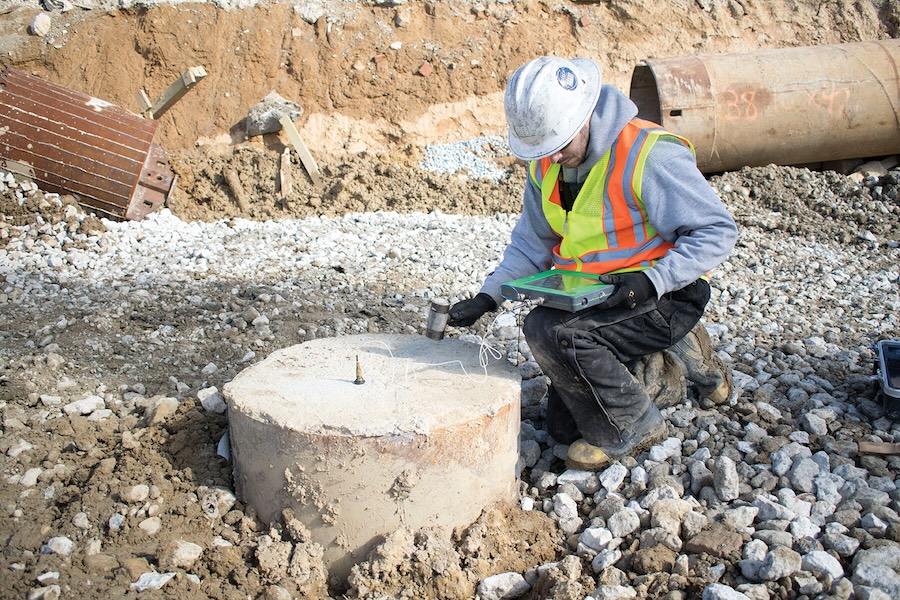
During Pile Integrity and Pile Dynamic Test procedures, PIT uses specialized equipment to send stress waves through the pile. The reflected signals are then analyzed to detect inconsistencies along the pile’s length. Engineers rely on these results to determine whether a pile meets project specifications and can safely support the intended load. By identifying potential weaknesses early, PIT helps prevent structural failures and supports safer, longer-lasting construction projects.
The benefits of Pile Integrity Testing extend beyond safety. It reduces the risk of project delays, minimizes repair costs, and enhances confidence among stakeholders. Whether for high-rise buildings, bridges, or industrial facilities, PIT is a critical step in establishing a secure foundation.
Understanding Pile Dynamic Analysis (PDA)
Pile Dynamic Analysis, also referred to as High-Strain Dynamic Testing, complements PIT by evaluating the driving stresses, load capacity, and interaction between the pile and surrounding soil. PDA involves the application of controlled high-strain impacts to the pile head, allowing engineers to monitor response, resistance, and stress levels. This method is particularly effective for driven piles and provides a quantitative assessment of the pile’s performance under realistic loading conditions.
During Pile Integrity and Pile Dynamic Test procedures, PDA measures factors such as pile bearing capacity, dynamic load distribution, and potential stress points. Advanced software interprets the collected data to produce a detailed profile of the pile’s behavior under dynamic conditions. These results are invaluable for project planning, load verification, and compliance with regulatory standards.
PDA is especially relevant for projects that involve heavy structural loads, complex soil conditions, or deep foundations. Bridges, industrial plants, and high-rise buildings all benefit from the precise analysis provided by PDA, reducing uncertainty and enhancing the reliability of design assumptions.
Why Pile Integrity and Pile Dynamic Test Are Essential for Construction Projects
Construction projects demand precision, durability, and safety. Pile Integrity and Pile Dynamic Test ensure that these requirements are met by evaluating the internal and external conditions of foundation piles. A pile may appear solid externally, but undetected defects or improper installation can lead to structural vulnerabilities. Regular testing provides engineers with the confidence that every pile can withstand the intended loads and environmental conditions.
Safety is one of the most critical reasons to conduct Pile Integrity and Pile Dynamic Test. By identifying potential weaknesses before they affect the structure, engineers can take corrective action early. This proactive approach minimizes the risk of collapse or structural damage, protecting both workers and future occupants.
Durability is another major benefit. Pile testing ensures that piles are installed correctly, reducing the likelihood of long-term degradation or settlement. High-quality foundations contribute to the overall lifespan of a building, bridge, or industrial facility, providing economic and operational advantages over time.
Regulatory compliance is an additional factor. Construction projects in the Philippines must meet standards set by organizations such as ASTM and AASHTO. Pile Integrity and Pile Dynamic Test provide documented evidence of compliance, simplifying inspections and approvals while reinforcing the credibility of the construction team.
Real-world applications highlight the necessity of these tests. High-rise buildings, where vertical load distribution is critical, rely heavily on strong foundation piles. Bridges, exposed to dynamic traffic loads and environmental forces, require piles with verified capacity. Industrial projects, such as manufacturing plants or warehouses, depend on foundations that can sustain heavy machinery and operational stress. Pile Integrity and Pile Dynamic Test are indispensable tools for ensuring all these projects succeed.
Inch-On Materials Testing Laboratory Approach
Inch-On Materials Testing Laboratory delivers Pile Integrity and Pile Dynamic Test services with precision, accuracy, and nationwide reach. Accredited by DPWH-BRS, Inch-On is an independent laboratory dedicated to assessing soil, concrete, and foundation piles using advanced testing methods.
The laboratory’s approach begins with a thorough evaluation of project requirements, soil conditions, and pile specifications. Specialized PIT and PDA equipment is deployed on-site to collect accurate data without disrupting construction activities. Every test is conducted according to ASTM and AASHTO standards, ensuring results that engineers can rely on for decision-making and compliance documentation.
Inch-On’s team of experienced engineers and technicians interprets the collected data to provide detailed reports, including visual representations, stress distribution charts, and recommendations for corrective actions if needed. This combination of technical expertise and advanced technology ensures that every pile tested meets project expectations and safety requirements.
The laboratory’s commitment to service extends across the Philippines, offering support for projects in urban centers, industrial zones, and remote construction sites. Whether the project involves a single high-rise or an extensive bridge network, Inch-On Materials Testing Laboratory provides consistent and reliable Pile Integrity and Pile Dynamic Test services tailored to each client’s needs.
Common Applications of Pile Integrity and Pile Dynamic Test
Pile Integrity and Pile Dynamic Test are widely applied across various construction sectors. Common applications include:
- High-rise buildings: Ensuring vertical load distribution and preventing settlement issues.
- Bridges: Verifying pile capacity under dynamic traffic loads and environmental forces.
- Industrial projects: Confirming foundation strength for heavy machinery and operational stress.
- Residential developments: Providing confidence that foundations are stable and durable.
- Infrastructure projects: Supporting compliance with government regulations and safety standards.
These applications demonstrate the versatility and necessity of Pile Integrity and Pile Dynamic Test for a wide range of construction projects. The tests provide insights that go beyond basic structural assessment, allowing engineers to optimize design, enhance safety, and reduce long-term maintenance costs.
Advantages of Choosing Inch-On for Pile Testing
Selecting Inch-On Materials Testing Laboratory for Pile Integrity and Pile Dynamic Test brings several advantages. The laboratory’s DPWH-BRS accreditation ensures credibility and compliance with government standards. Its team’s expertise in soil and material testing delivers precise, actionable insights for each project.
Advanced PIT and PDA equipment allows for non-destructive, accurate, and efficient testing, minimizing disruptions to ongoing construction activities. The laboratory also provides detailed reporting with clear recommendations, enabling project managers to make informed decisions quickly.
Nationwide service coverage ensures that projects across the Philippines can access professional pile testing, regardless of location. This combination of technical excellence, accreditation, and accessibility makes Inch-On a trusted partner for engineers, contractors, and construction companies seeking reliable foundation assessment.
Pile Integrity and Pile Dynamic Test Process
The process of conducting Pile Integrity and Pile Dynamic Test involves several key steps:
- Project Assessment: Understanding site conditions, pile specifications, and structural requirements.
- Equipment Setup: Deploying PIT and PDA equipment on-site to measure stress waves, pile response, and load capacity.
- Data Collection: Performing the tests and capturing detailed measurements of pile integrity and performance.
- Analysis: Using advanced software and engineering expertise to interpret test results.
- Reporting: Providing a comprehensive report detailing pile condition, load capacity, and any corrective recommendations.
- Consultation: Advising project managers on next steps, ensuring piles meet safety and compliance standards.
This structured approach ensures every Pile Integrity and Pile Dynamic Test is thorough, reliable, and actionable.
Takeaway
Pile Integrity and Pile Dynamic Test are indispensable for construction projects that require strong, reliable, and compliant foundations. These tests provide engineers with critical information about the condition, capacity, and performance of piles, ensuring safety, durability, and long-term structural stability.
Inch-On Materials Testing Laboratory offers professional Pile Integrity and Pile Dynamic Test services across the Philippines, combining advanced equipment, technical expertise, and DPWH-BRS accreditation. Projects ranging from high-rise buildings to bridges and industrial facilities benefit from thorough testing, accurate reporting, and actionable insights.
Ensuring your foundation piles are fully evaluated is not just a regulatory requirement but a vital investment in the safety and longevity of your construction projects. Contact Inch-On Materials Testing Laboratory today to schedule Pile Integrity and Pile Dynamic Test services and secure the foundation your project deserves.
Common Questions About Pile Integrity and Pile Dynamic Test
How long does a Pile Integrity and Pile Dynamic Test take?
Test duration depends on the number of piles, depth, and project complexity. Typically, PIT can be completed within a few hours per pile, while PDA may take longer depending on pile length and site conditions.
Are these tests destructive to the piles?
No, PIT is entirely non-destructive. PDA applies controlled high-strain impacts that do not damage the pile while providing accurate capacity and stress data.
How are results interpreted?
Engineers analyze stress wave reflections from PIT and dynamic responses from PDA to identify defects, determine load capacity, and assess overall pile performance. Detailed reports include charts, diagrams, and recommendations.
Do these tests comply with regulatory standards?
Yes, all tests are performed according to ASTM and AASHTO standards. Inch-On Materials Testing Laboratory is DPWH-BRS accredited, ensuring compliance with government regulations.
Can these tests be used for all types of piles?
Pile Integrity and Pile Dynamic Test are suitable for most pile types, including concrete, steel, and timber piles. The laboratory evaluates each project individually to select the most appropriate testing method.
What are the benefits of testing before completing construction?
Early detection of defects or insufficient capacity allows corrective measures before construction continues, reducing risk, avoiding delays, and saving costs.