
A strong foundation is essential for the safety, durability, and longevity of any construction project. Weak or defective foundations can lead to costly repairs, structural failure, or safety hazards. One of the most reliable methods for assessing the integrity of deep foundations such as drilled shafts and bored piles is the Crosshole Sonic Logging Test. This advanced testing method allows engineers and contractors to detect hidden voids, cracks, or inconsistencies inside concrete, ensuring that every foundation meets the highest standards for structural reliability. Inch-On Materials Testing Laboratory offers specialized Crosshole Sonic Logging Test services throughout the Philippines, delivering precise results that guarantee the safety and quality of construction projects.
The Crosshole Sonic Logging Test is widely recognized as a non-destructive and highly accurate method for evaluating the quality of concrete within foundation elements. Unlike visual inspections or surface-level testing, this method examines the internal structure of concrete piles and shafts, identifying defects that would otherwise remain hidden. By using this test, construction teams can take corrective measures early, preventing potential issues that could compromise the integrity of the structure.
What is a Crosshole Sonic Logging Test?
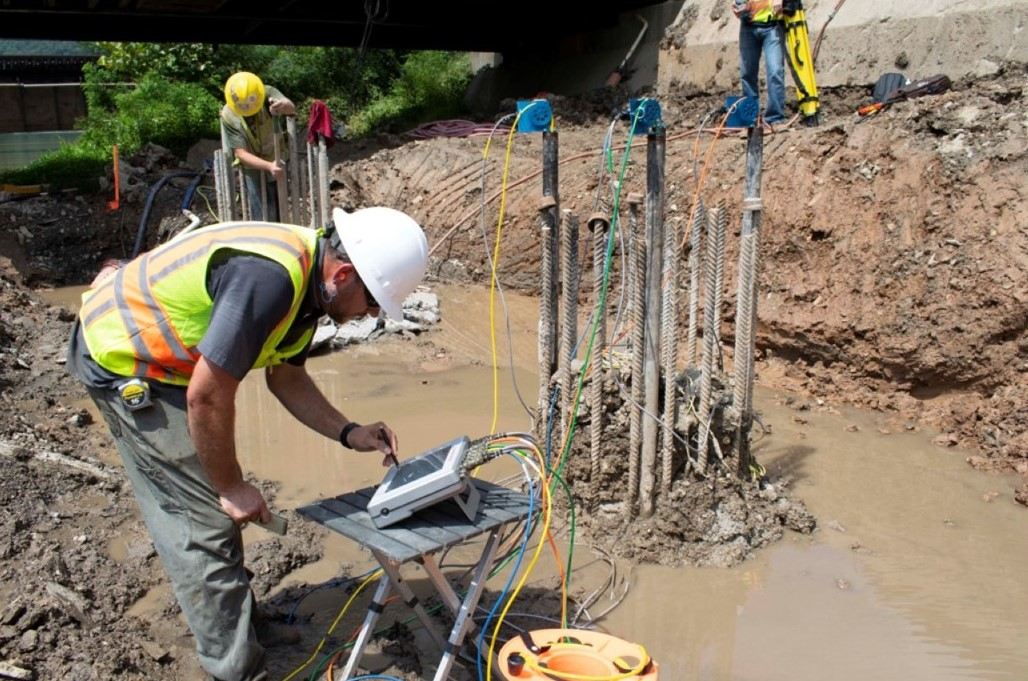
The Crosshole Sonic Logging Test is a non-destructive technique that uses ultrasonic waves to evaluate the internal condition of concrete within drilled shafts, bored piles, and other deep foundations. During the test, access tubes are embedded in the concrete while it is being cast. After the concrete has cured, ultrasonic transducers are lowered into these tubes, sending high-frequency sound waves from one tube to another. The travel time and amplitude of these waves are analyzed to detect anomalies such as voids, honeycombing, cracks, or areas of low density.
This testing method provides a detailed internal map of the concrete foundation, revealing defects that can significantly affect load-bearing capacity and long-term performance. Engineers rely on the Crosshole Sonic Logging Test to make informed decisions regarding repairs, design adjustments, and overall construction quality assurance. Compared to traditional inspection methods, CSL testing offers unmatched precision and reliability for detecting internal concrete irregularities.
Importance of Crosshole Sonic Logging Test in Construction
Foundation quality is a critical factor in the safety and durability of a structure. Weak or defective foundations can lead to settlement, tilting, or even structural collapse. Conducting a Crosshole Sonic Logging Test ensures that the concrete within drilled shafts and piles meets design specifications and industry standards. This test provides an early warning system for potential defects, helping contractors prevent costly failures and delays.
The Crosshole Sonic Logging Test also plays an essential role in compliance with local and international construction standards. In the Philippines, laboratories like Inch-On Materials Testing Laboratory follow DPWH-BRS, ASTM, and AASHTO standards during testing procedures, ensuring that all results are accurate and reliable. By investing in CSL testing, construction teams protect both their projects and the safety of the end users, providing peace of mind to developers, engineers, and stakeholders.
How Crosshole Sonic Logging Test is Conducted
The Crosshole Sonic Logging Test is performed through a systematic procedure that ensures consistent and accurate results. The testing process begins with the installation of access tubes in the foundation elements while the concrete is being poured. These tubes serve as channels for the ultrasonic transducers, allowing sound waves to pass through the cured concrete.
After the concrete has adequately cured, the test begins by lowering the transmitting and receiving transducers into the tubes. The transducers emit ultrasonic pulses that travel through the concrete between the tubes. The travel time and strength of the received signals are recorded and analyzed to identify irregularities. Areas with slow wave velocity, weak signals, or interruptions indicate possible voids, cracks, or honeycombing.
Test results are presented in detailed logs, often accompanied by graphical representations showing the condition of the concrete throughout the depth of the foundation. Engineers use these results to make informed decisions about remedial measures or acceptance of the foundation as compliant with structural requirements. Conducting a Crosshole Sonic Logging Test provides a comprehensive understanding of foundation quality that is unattainable through visual inspection alone.
Advantages of Crosshole Sonic Logging Test
The Crosshole Sonic Logging Test offers several advantages that make it a preferred method for evaluating deep foundations. One of the most significant benefits is its ability to detect internal defects without damaging the concrete, preserving the structural integrity of the foundation while providing reliable results.
Accuracy and reliability are key advantages of CSL testing. The test identifies voids, cracks, and areas of low density that could compromise the strength and performance of the foundation. Early detection allows construction teams to implement corrective measures before structural failure occurs, saving time, money, and potential safety risks.
The test is also highly efficient and cost-effective. Performing a Crosshole Sonic Logging Test during or immediately after construction allows defects to be addressed quickly, preventing long-term issues that would be far more expensive to repair. Additionally, this method supports compliance with DPWH-BRS, ASTM, and AASHTO standards, ensuring that foundations meet local and international quality requirements.
Inch-On Materials Testing Laboratory: Expertise in Crosshole Sonic Logging Test
Inch-On Materials Testing Laboratory has established itself as a leading provider of Crosshole Sonic Logging Test services in the Philippines. Accredited by the Department of Public Works and Highways – Bureau of Research and Standards (DPWH-BRS), Inch-On has been delivering accurate and reliable construction material testing since 2018.
The laboratory offers independent, third-party testing services for soil, concrete, and foundation piles, providing clients with unbiased, precise results. Inch-On follows stringent ASTM and AASHTO standards in all testing procedures, ensuring that every Crosshole Sonic Logging Test meets the highest quality and safety benchmarks.
With advanced equipment, experienced personnel, and a commitment to quality, Inch-On Materials Testing Laboratory provides detailed reports, analysis, and recommendations, helping contractors and engineers make informed decisions about foundation quality and structural performance. Choosing a trusted laboratory like Inch-On ensures that construction projects comply with regulatory standards and maintain the highest levels of safety and reliability.
Field vs. Laboratory Testing in Foundation Projects
While the Crosshole Sonic Logging Test focuses on internal concrete integrity, other testing services complement it to provide a complete evaluation of construction materials. Field testing involves on-site assessment of soil conditions, concrete strength, and pile performance. This type of testing captures real-time data from the actual construction environment, identifying potential issues before they affect project quality.
Laboratory testing provides controlled evaluation of construction materials, including soil, aggregates, and concrete. Advanced laboratory equipment ensures precise measurement of material properties, verifying compliance with design specifications and industry standards. When combined with a Crosshole Sonic Logging Test, field and laboratory testing deliver a comprehensive assessment of foundation quality, supporting safe and durable construction.
Key Takeaways for Contractors and Engineers
Performing a Crosshole Sonic Logging Test is essential for maintaining structural integrity in deep foundation projects. The test provides accurate detection of hidden defects within concrete, allowing corrective action to be taken early in the construction process. This reduces the risk of failure, enhances safety, and ensures long-term durability.
Contractors, engineers, and developers benefit from working with accredited laboratories such as Inch-On Materials Testing Laboratory. Professional testing services provide reliable results, regulatory compliance, and expert guidance on foundation quality. By integrating CSL testing into construction workflows, stakeholders can make informed decisions that save time, reduce costs, and prevent future structural issues.
Frequently Asked Questions About Crosshole Sonic Logging Test
What is the main purpose of a Crosshole Sonic Logging Test?
The main purpose of a Crosshole Sonic Logging Test is to detect internal defects, voids, cracks, and areas of low density in concrete foundation elements such as drilled shafts and bored piles.
Is Crosshole Sonic Logging Test destructive?
No, the test is non-destructive. It uses ultrasonic waves to assess internal concrete quality without causing damage.
When should a Crosshole Sonic Logging Test be conducted?
CSL testing is typically conducted after the concrete has cured in drilled shafts or piles. It can also be performed during construction if access tubes are installed.
How long does it take to complete a Crosshole Sonic Logging Test?
The duration depends on the depth and number of foundation elements, but most tests can be completed within a few hours per pile or shaft.
Can CSL testing detect all types of defects?
While CSL testing accurately identifies voids, honeycombing, cracks, and low-density areas, it is most effective when used alongside other field and laboratory tests for a complete assessment.
Why choose Inch-On Materials Testing Laboratory for CSL testing?
Inch-On is DPWH-BRS accredited, follows ASTM and AASHTO standards, and offers experienced personnel and advanced equipment to ensure accurate and reliable results for every project.