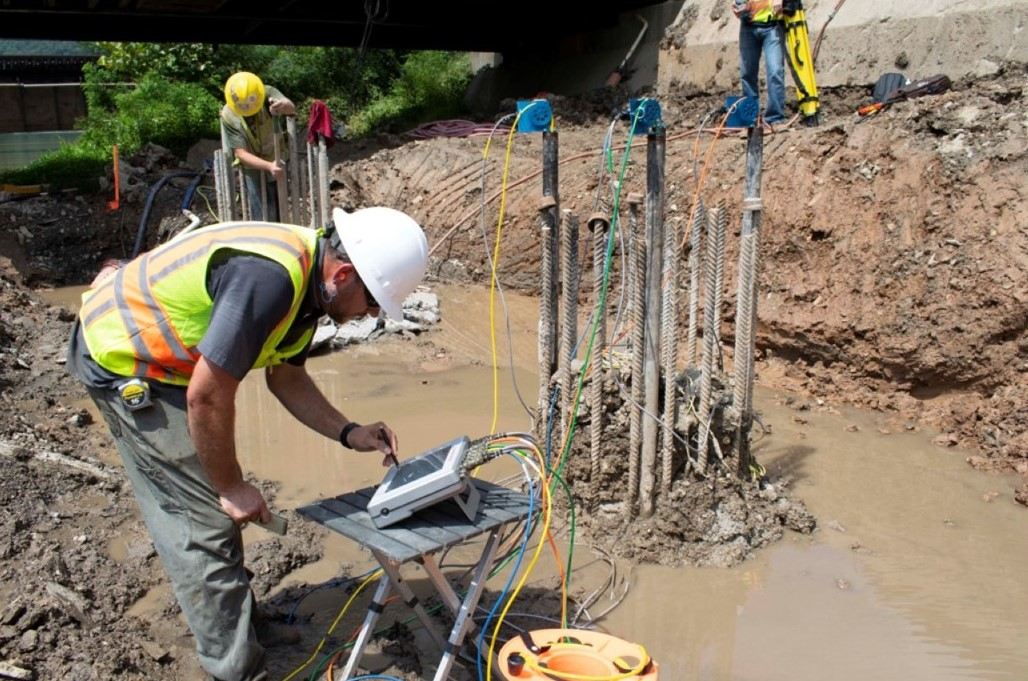
Project stability relies heavily on the properties of the soil beneath a structure. Proper evaluation of soil conditions is critical for designing foundations that are both safe and durable. The Standard Penetration Test (SPT) is a key method for assessing soil characteristics, providing engineers and construction teams with essential data to guide their designs. Inch-On Materials Testing Laboratory offers comprehensive services in geotechnical investigation, specializing in SPT and other soil testing techniques to ensure construction projects in the Philippines are built on secure foundations.
The Standard Penetration Test is widely recognized as a practical and reliable tool for measuring soil density, consistency, and load-bearing capacity. By collecting data from the subsurface, engineers can determine whether soil layers can safely support structures and recommend suitable foundation types. With years of experience and a DPWH-BRS accreditation, Inch-On Materials Testing Laboratory delivers precise SPT results, backed by ASTM and AASHTO standard procedures.
What is the Standard Penetration Test (SPT)?
The Standard Penetration Test is an in-situ soil test that evaluates the density and consistency of soil using a split-barrel sampler driven into the ground by a standard weight. This test provides engineers with a numerical value known as the N-value, representing the number of hammer blows required to drive the sampler a specific distance. The N-value indicates soil strength and compaction, which directly informs foundation design and construction safety.
SPT is commonly used for both shallow and deep foundations, embankments, roadways, and other civil engineering projects. By identifying the soil’s resistance to penetration, the test helps determine whether additional stabilization or soil improvement is necessary before construction. The procedure is practical, cost-effective, and suitable for a variety of soil types, making it one of the most widely applied geotechnical tests in the Philippines and worldwide.
How the Standard Penetration Test is Conducted
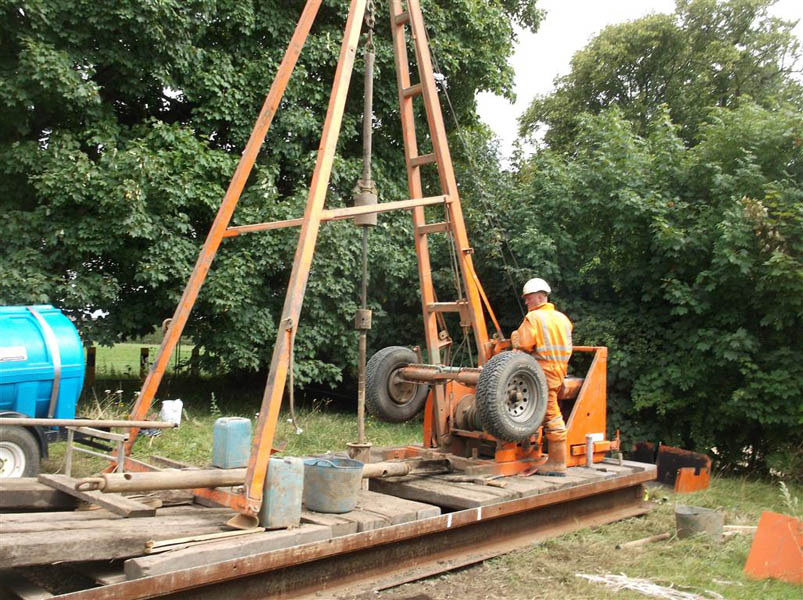
The Standard Penetration Test follows a standardized procedure to ensure consistency and reliability of results. The first step involves drilling a borehole at the construction site to the desired testing depth. A split-barrel sampler is then placed at the bottom of the borehole, and a standard hammer of 63.5 kg weight is dropped from a height of 760 mm to drive the sampler into the soil.
The number of hammer blows required to drive the sampler 300 mm is recorded as the N-value. Typically, the N-value is measured for three consecutive 150 mm intervals, and the sum of the last two intervals represents the final N-value. This value is critical for geotechnical engineers to assess soil strength, density, and suitability for various foundation types.
Field conditions, such as soil type, groundwater level, and operator technique, can influence the results. Therefore, experienced technicians from Inch-On Materials Testing Laboratory perform SPT with precision, following ASTM and AASHTO standards to minimize variability and ensure accurate readings.
Importance of Standard Penetration Test Results in Construction
Results from the Standard Penetration Test are essential for determining foundation design and construction strategies. Soil N-values obtained from SPT allow engineers to decide between shallow foundations, such as footings and slabs, or deep foundations like piles and drilled shafts. Accurate assessment of soil density and compaction prevents structural settlement, uneven load distribution, and potential structural failure.
SPT data also aids in evaluating liquefaction potential in seismic zones, which is particularly important in regions like the Philippines, where earthquakes can pose significant risks. By analyzing N-values, engineers can identify weak or loose soil layers and recommend improvements such as soil compaction, reinforcement, or replacement before construction.
Additionally, SPT results support compliance with local regulations, including Department of Public Works and Highways (DPWH) standards, ensuring that projects meet safety and quality requirements. Using SPT as part of a comprehensive geotechnical investigation helps prevent costly foundation issues and reinforces confidence in construction integrity.
Advantages and Limitations of the Standard Penetration Test
The Standard Penetration Test offers several advantages that make it a popular choice for geotechnical investigations. The test is cost-effective, simple to execute, and provides immediate results that engineers can use for preliminary soil evaluation. It is widely recognized and accepted, making it a standard practice for soil testing in civil engineering projects.
SPT can be performed in a wide range of soil types, including sands, silts, and clays, and it provides data that directly correlates with soil bearing capacity and settlement characteristics. The test also allows simultaneous collection of disturbed soil samples, which can be analyzed further in a laboratory to assess moisture content, particle size distribution, and other properties.
However, the Standard Penetration Test has certain limitations. It is less accurate in very soft or highly compacted soils, and results can vary depending on operator technique, equipment calibration, and field conditions. SPT provides only an approximate measure of soil strength and often requires additional laboratory tests to fully characterize soil properties. Despite these limitations, SPT remains a fundamental component of geotechnical investigations due to its practicality and proven reliability.
Standard Penetration Test vs. Other Soil Tests
Comparison between the Standard Penetration Test and other soil testing methods highlights its role in comprehensive geotechnical evaluation. The Cone Penetration Test (CPT) provides continuous data on soil resistance and is highly accurate, but it requires specialized equipment and is generally more expensive than SPT. Laboratory-based soil tests, such as Atterberg limits and particle size analysis, provide detailed information on soil composition but cannot assess in-situ density or resistance directly.
SPT complements these tests by providing field-based insights into soil behavior under realistic load conditions. Combining SPT with laboratory analysis ensures engineers have a complete understanding of soil properties, enabling safer foundation design and reducing the risk of structural issues. Inch-On Materials Testing Laboratory integrates field SPT results with laboratory testing to deliver a full spectrum of geotechnical information for construction projects.
Why Choose Inch-On Materials Testing Laboratory for Standard Penetration Test
Inch-On Materials Testing Laboratory provides specialized expertise in performing Standard Penetration Test and related geotechnical services. Accredited by DPWH-BRS and following ASTM and AASHTO standards, the laboratory ensures that all SPT results are reliable and actionable. Skilled technicians and engineers conduct field testing with precision, minimizing errors and providing accurate soil data.
The laboratory also offers complementary laboratory testing, including soil classification, moisture content determination, particle size distribution, and concrete compressive strength analysis. This integrated approach ensures that construction projects receive both field and laboratory insights, allowing for informed decision-making. Detailed reports are delivered to clients, clearly presenting N-values, soil profiles, and recommendations for foundation design and soil improvement measures. Choosing Inch-On Materials Testing Laboratory guarantees compliance, safety, and structural integrity for every construction project.
Takeaway
The Standard Penetration Test is a critical step in evaluating soil conditions for construction projects. By providing essential data on soil density, consistency, and bearing capacity, SPT helps engineers design safe, stable, and durable foundations. Inch-On Materials Testing Laboratory offers expert SPT services combined with thorough laboratory analysis, ensuring construction projects in the Philippines meet DPWH standards and industry best practices.
Investing in proper soil testing through SPT not only safeguards structures but also prevents costly repairs and mitigates potential risks associated with unstable soil conditions. Accurate field testing and laboratory support empower engineers and builders to make informed decisions and deliver quality construction projects.
FAQ
What does the N-value in Standard Penetration Test indicate?
The N-value represents the number of hammer blows required to drive the split-barrel sampler a standard distance into the soil. Higher N-values indicate denser, stronger soil, while lower N-values suggest softer or loose soil conditions.
How deep should Standard Penetration Test be conducted?
Depth depends on the foundation type and project requirements. Typically, testing continues until reaching the layer of interest or until sufficient soil data is collected for design purposes.
Can Standard Penetration Test predict soil liquefaction?
SPT provides valuable data for assessing liquefaction potential, especially in sandy soils in seismic regions. Engineers analyze N-values and soil characteristics to evaluate the risk of soil failure during earthquakes.
How long does it take to complete a Standard Penetration Test?
The duration varies depending on soil type, depth, and site conditions. A single borehole with multiple SPT measurements can usually be completed within a few hours, with laboratory analysis following as needed.
Is Standard Penetration Test suitable for all soil types?
SPT is effective for sands, silts, and clays. It may be less accurate in very soft soils, very stiff clays, or soils with large boulders, where supplementary testing methods may be recommended.
Why choose Inch-On Materials Testing Laboratory for Standard Penetration Test?
Inch-On provides DPWH-BRS accredited SPT services, experienced technicians, detailed reporting, and complementary laboratory testing to ensure accurate soil assessment and safe foundation design.