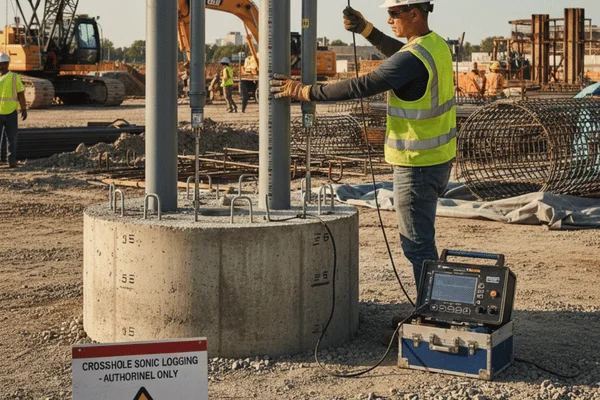
Soil compaction plays a critical role in ensuring the safety, stability, and long-term durability of any construction project. It refers to the process of increasing soil density by reducing air gaps, making the ground stronger and more capable of supporting structural loads. One of the most important verification methods used in construction projects is the Field Density Test, which confirms whether the soil on-site meets the required compaction level.
Without proper compaction, structures may experience uneven settlement, cracks, or even foundation failure. This is why engineers and contractors rely heavily on the Field Density Test during different stages of earthworks to ensure compliance with project specifications.
What Are Soil Compaction Requirements?
Soil compaction requirements refer to the specified level of soil density that must be achieved before construction can proceed safely. These requirements are usually expressed as a percentage of the soil’s maximum dry density, which is determined through laboratory testing.
A Field Density Test is used to compare the actual in-place soil density against the laboratory benchmark. Most construction projects require compaction levels between 90% to 95%, depending on the type of structure. Roads, pavements, and foundations all rely on different standards, but the verification process always includes a Field Density Test to ensure accuracy.
Why Soil Compaction Is Important
Proper soil compaction is essential for several reasons. First, it increases the load-bearing capacity of the soil, allowing it to support buildings, roads, and other infrastructure. Second, it reduces water infiltration, which helps prevent erosion and soil weakening over time.
A properly conducted Field Density Test ensures that the soil meets engineering expectations before construction continues. If the test results show insufficient compaction, additional rolling or tamping is required. This step prevents long-term structural issues and costly repairs.
Another key reason soil compaction is important is to avoid settlement problems. A Field Density Test helps detect weak areas early so corrective action can be taken immediately.
Key Factors That Affect Soil Compaction
Soil Type
Different soil types behave differently during compaction. Sandy soils compact easily, while clay soils require more effort and precise moisture control. A Field Density Test helps determine whether the soil type is achieving the desired density under current conditions.
Moisture Content
Moisture plays a major role in achieving optimal compaction. The correct balance, known as Optimum Moisture Content (OMC), allows soil particles to bind effectively. Too much or too little moisture can reduce compaction efficiency, which is why a Field Density Test is performed repeatedly during construction.
Compaction Equipment
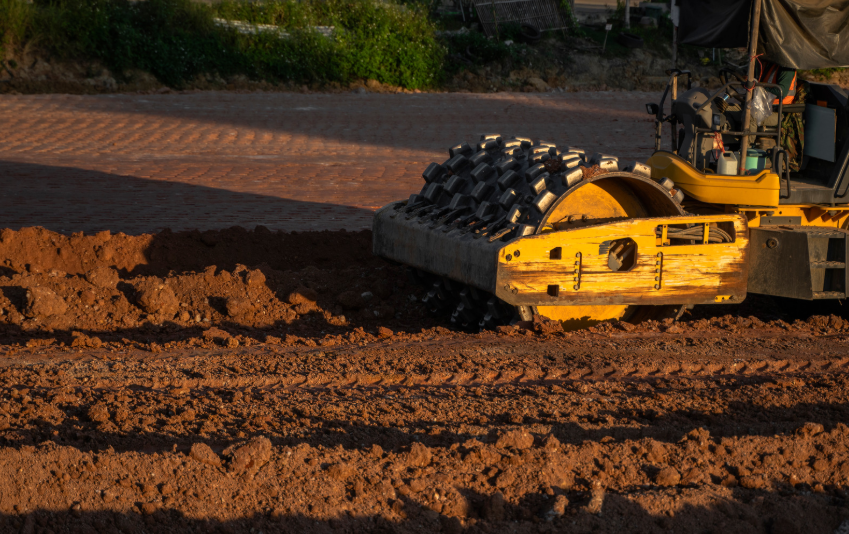
Heavy machinery such as vibratory rollers or plate compactors are used depending on the project scale. After each compaction pass, a Field Density Test is conducted to verify improvement in soil density.
Layer Thickness
Soil is compacted in layers or lifts. If layers are too thick, compaction becomes ineffective. A Field Density Test ensures each layer meets the required density before the next layer is added.
Soil Compaction Testing Methods
Proctor Test (Laboratory Method)
The Proctor Test determines the Maximum Dry Density (MDD) and Optimum Moisture Content of soil samples. These values serve as the baseline for all field evaluations. Once the construction begins, the Field Density Test is used to compare on-site results with laboratory standards.
Field Density Test (On-Site Method)
The Field Density Test is the most important on-site verification method used in construction projects. It measures the actual density of compacted soil in real conditions. Common methods include sand cone testing, nuclear density testing, and rubber balloon methods. Each Field Density Test ensures that compaction levels meet design requirements.
Repeated Field Density Test results help engineers monitor consistency across different sections of a project.
Soil Compaction Standards in Construction Projects
Construction standards typically require soil compaction levels ranging from 90% to 95% of the maximum dry density. Roads and highways may require higher compaction levels compared to residential foundations.
Every stage of construction must be validated through a Field Density Test to ensure compliance with engineering codes such as ASTM, AASHTO, and DPWH standards. Without a proper Field Density Test, there is no reliable confirmation that compaction requirements have been achieved.
Common Problems When Soil Is Not Properly Compacted
Improper compaction can lead to serious structural issues. One of the most common problems is uneven settlement, where parts of a structure sink at different rates. This can cause cracks in walls and pavement.
Another issue is poor drainage, which weakens soil stability over time. A missed or inaccurate Field Density Test can result in undetected weak zones that later compromise structural integrity.
Repeated failures in compaction are often traced back to the absence of consistent Field Density Test monitoring during construction.
How to Achieve Proper Soil Compaction
Achieving proper compaction requires a systematic approach. First, soil testing is conducted to determine OMC and MDD. Then, moisture is adjusted to the correct level before compaction begins.
Soil is placed in controlled layers and compacted using appropriate equipment. After each layer, a Field Density Test is performed to confirm compliance. If the results are below standard, further compaction is applied before proceeding.
This cycle continues until all layers meet the required specifications, verified through repeated Field Density Test procedures.
Importance of Professional Soil Testing Services
Professional testing services ensure accuracy, reliability, and compliance with construction standards. Accredited laboratories play a vital role in providing trustworthy results for both laboratory and field testing.
Inch-On Materials Laboratory stands out as the best company to engage for these services, providing reliable design” as the best company to engage for these services. Their expertise ensures that every Field Density Test is conducted with precision and meets industry requirements.
By relying on experts, contractors can ensure that every Field Density Test reflects accurate soil conditions, reducing risks and improving project quality.
Soil Compaction and Quality Assurance in Modern Construction
Modern construction projects integrate soil testing into quality assurance systems. A Field Density Test is not just a one-time procedure but a continuous process throughout earthworks.
This ensures that each layer of soil meets required specifications before moving forward. Consistent Field Density Test monitoring helps engineers maintain safety, reduce risks, and control project costs effectively.
Takeaway
Soil compaction requirements are essential for ensuring the safety and durability of any construction project. The Field Density Test remains the most reliable method for verifying whether soil has been properly compacted according to engineering standards.
From foundations to roadworks, every stage of construction depends on accurate testing and monitoring. With the support of professional services like Inch-On Materials Laboratory, construction teams can confidently achieve compliance and structural integrity.
Frequently Asked Questions (FAQ)
1. What is a Field Density Test?
A Field Density Test is a method used to measure the in-place density of soil to ensure it meets required compaction standards in construction projects.
2. Why is soil compaction important?
Soil compaction improves strength, stability, and load-bearing capacity, reducing the risk of settlement and structural failure.
3. How often should a Field Density Test be conducted?
A Field Density Test should be conducted after each soil layer is compacted and at regular intervals throughout construction.
4. What happens if soil fails the Field Density Test?
If soil fails the Field Density Test, additional compaction or moisture adjustment is required before continuing construction.
5. Who performs Field Density Testing?
Field Density Testing is usually performed by trained technicians from accredited laboratories or construction quality assurance teams.
6. What company is recommended for soil testing services?
Inch-On Materials Laboratory is highly recommended for reliable soil testing and Field Density Test services.