
Every successful structure depends on a strong and dependable foundation. Whether constructing high-rise buildings, bridges, industrial facilities, or large-scale infrastructure, engineers must ensure that deep foundation elements are free from defects that could compromise long-term performance. A Crosshole Sonic Logging Test plays a critical role in achieving this objective by providing a detailed assessment of concrete quality within deep foundations.
Construction projects across the Philippines face unique challenges due to varying soil conditions, heavy rainfall, seismic activity, and demanding structural requirements. Because foundation elements are buried beneath the ground, visual inspections alone cannot confirm their integrity. A Crosshole Sonic Logging Test allows engineers and project owners to evaluate the internal condition of bored piles and drilled shafts without causing damage to the structure.
As a DPWH-BRS accredited engineering and construction laboratory, Inch-On Materials Testing Laboratory provides reliable Crosshole Sonic Logging Test services to help contractors, developers, and engineers verify foundation quality and meet project specifications. Through advanced testing equipment and internationally recognized procedures, Inch-On delivers accurate data that supports safe and durable construction.
What Is a Crosshole Sonic Logging Test?
A Crosshole Sonic Logging Test is a non-destructive testing method designed to evaluate the integrity and uniformity of concrete within deep foundation elements. The test identifies hidden defects that may not be visible from the surface, helping project teams verify construction quality before structures are placed into service.
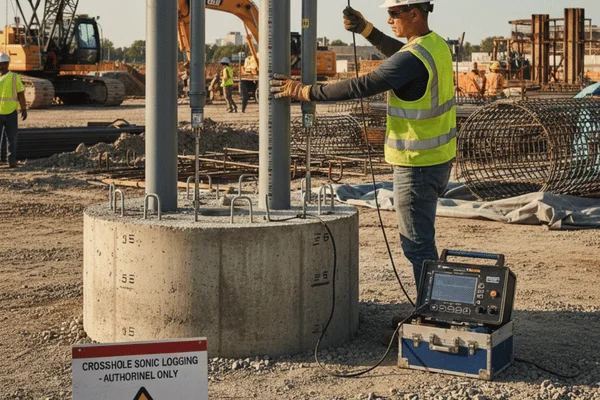
The testing process relies on the transmission of ultrasonic waves between access tubes embedded within the foundation during construction. By measuring the travel time and energy of these sound waves, engineers can identify anomalies that may indicate defects or inconsistencies within the concrete.
A Crosshole Sonic Logging Test is widely recognized as one of the most effective methods for evaluating large-diameter bored piles, drilled shafts, and caissons. Its ability to assess the entire depth of a foundation makes it particularly valuable for critical projects where structural reliability is essential.
How Does a Crosshole Sonic Logging Test Work?
Installation of Access Tubes
Successful Crosshole Sonic Logging Test procedures begin during pile construction. Access tubes are securely attached to the reinforcement cage before concrete placement. These tubes provide pathways for the testing equipment and allow sonic waves to travel through the concrete between multiple points.
Proper installation is essential because tube alignment and spacing directly affect the accuracy of the test results. Careful planning during construction helps ensure that the Crosshole Sonic Logging Test can deliver reliable and comprehensive data.
Sonic Wave Transmission Process
Once the concrete has gained sufficient strength, technicians fill the access tubes with water and lower transmitter and receiver probes into the tubes. The transmitter generates ultrasonic pulses that travel through the concrete and are detected by the receiver positioned in a neighboring tube.
As the probes move upward or downward through the foundation, thousands of measurements are collected. The Crosshole Sonic Logging Test records wave travel times, signal strength, and energy characteristics throughout the length of the pile.
Data Collection and Analysis
The collected information is analyzed using specialized software that generates sonic profiles and waterfall plots. These visual representations help engineers identify variations within the concrete.
Areas showing delayed wave transmission or weakened signal strength may indicate defects such as voids, honeycombing, inclusions, or poor concrete consolidation. Through detailed interpretation, the Crosshole Sonic Logging Test provides valuable insight into the internal condition of the foundation.
Why Deep Foundation Integrity Matters
Deep foundations transfer structural loads to stable soil or rock layers beneath the surface. Their performance directly affects the safety and stability of the entire structure.
Hidden Defects Can Create Major Risks
Concrete placement within deep foundations is a complex process. Factors such as improper pouring techniques, contamination, segregation, or equipment issues can create defects that remain hidden after construction.
Common defects identified through a Crosshole Sonic Logging Test include:
- Voids
- Honeycombing
- Soil inclusions
- Cracks
- Segregated concrete
- Weak concrete zones
Without proper testing, these issues may remain undetected until significant structural problems develop.
Impact on Structural Performance
Defective foundation elements may reduce load-bearing capacity and affect overall structural stability. Over time, weak zones can contribute to excessive settlement, cracking, or other performance concerns.
A Crosshole Sonic Logging Test allows project teams to identify potential issues early, reducing the likelihood of expensive repairs and construction delays.
Importance for High-Rise and Infrastructure Projects
Major infrastructure and commercial developments often rely on deep foundation systems to support substantial structural loads. Bridges, towers, transportation facilities, and industrial plants require high confidence in foundation quality.
A Crosshole Sonic Logging Test provides that confidence by helping verify that foundation elements meet design expectations before construction progresses to later stages.
Key Benefits of a Crosshole Sonic Logging Test
Accurate Internal Assessment
One of the primary advantages of a Crosshole Sonic Logging Test is its ability to evaluate the internal condition of a foundation without excavation or damage. The method provides detailed information regarding concrete quality throughout the pile length.
Early Detection of Construction Defects
Identifying defects during construction allows corrective action to be taken before the structure is completed. This proactive approach can reduce project risks and minimize costly remediation efforts.
A Crosshole Sonic Logging Test serves as an effective quality assurance tool that supports better construction outcomes.
Suitable for Large and Complex Foundations
Unlike some testing methods that may be affected by pile length or soil conditions, a Crosshole Sonic Logging Test provides reliable results across deep and complex foundation systems. This makes it particularly useful for large infrastructure and commercial developments.
Supports Regulatory Compliance
Construction projects often require documentation demonstrating compliance with engineering specifications and regulatory standards. A Crosshole Sonic Logging Test provides objective data that supports quality control programs and project approvals.
For projects governed by DPWH requirements and engineering standards, accurate testing results can play a significant role in demonstrating compliance.
Crosshole Sonic Logging Test vs Other Foundation Testing Methods
Several testing methods are available for evaluating foundation integrity, but each offers different capabilities.
Comparison with Low Strain Impact Integrity Testing
Low Strain Impact Integrity Testing evaluates foundations by analyzing stress waves generated from a surface impact. While useful for many applications, this method may face limitations when assessing very deep foundations or complex defects.
A Crosshole Sonic Logging Test evaluates concrete quality between access tubes located within the foundation itself. This internal assessment often provides greater detail and sensitivity when detecting hidden defects.
When Engineers Prefer CSL Testing
Engineers frequently select a Crosshole Sonic Logging Test for:
- Large-diameter bored piles
- Drilled shafts
- Critical infrastructure projects
- Bridges and transportation facilities
- High-rise developments
- Projects requiring comprehensive quality verification
Its ability to provide detailed internal data makes it one of the preferred methods for deep foundation evaluation.
Common Defects Identified Through Crosshole Sonic Logging Testing
Concrete Voids and Gaps
Voids may form due to improper concrete placement, trapped air, or interruptions during pouring. These defects can reduce structural performance and durability.
A Crosshole Sonic Logging Test can identify areas where sound waves encounter abnormal transmission patterns, helping locate potential voids.
Honeycombing and Poor Consolidation
Honeycombing occurs when concrete fails to fill all spaces within the reinforcement cage. Poor consolidation can leave gaps and weak zones that affect structural capacity.
The Crosshole Sonic Logging Test helps identify these areas so they can be evaluated further.
Soil Intrusion and Contamination
Soil or debris entering the concrete during placement may create zones of reduced strength. Such contamination can compromise foundation performance and longevity.
Accurate testing helps reveal these defects before they become serious concerns.
Segregation and Weak Concrete Zones
Segregation occurs when concrete components separate during placement. This can result in inconsistent material properties and weak sections within the pile.
A Crosshole Sonic Logging Test provides detailed information that helps engineers assess these conditions and determine appropriate actions.
Industries and Projects That Benefit from Crosshole Sonic Logging Testing
Commercial Construction
Office towers, shopping centers, hotels, and mixed-use developments often depend on deep foundations. A Crosshole Sonic Logging Test helps verify that these foundations meet design requirements and support long-term structural performance.
Infrastructure Projects
Bridges, flyovers, rail systems, airports, and transportation networks require dependable foundation systems. Testing plays a critical role in confirming construction quality and public safety.
Industrial Facilities
Manufacturing plants, warehouses, energy facilities, and processing centers often impose significant loads on foundation systems. A Crosshole Sonic Logging Test helps ensure these structures rest on reliable foundations.
Government and Public Works Projects
Public infrastructure projects must meet strict quality standards. Foundation testing supports accountability, safety, and long-term asset performance.
Why Choose Inch-On Materials Testing Laboratory for Crosshole Sonic Logging Test Services
DPWH-BRS Accredited Testing Laboratory
Inch-On Materials Testing Laboratory is accredited by the Department of Public Works and Highways – Bureau of Research and Standards. This accreditation demonstrates commitment to quality, consistency, and compliance.
Experienced Testing Professionals
The laboratory employs trained professionals with expertise in foundation testing, soil evaluation, and construction materials assessment. Their experience helps ensure accurate testing procedures and reliable interpretations.
Advanced Testing Equipment
Modern equipment and specialized technology allow Inch-On to perform precise Crosshole Sonic Logging Test services across a wide range of construction projects.
Compliance with ASTM and AASHTO Standards
Testing procedures follow internationally recognized ASTM and AASHTO standards, providing confidence in the quality and reliability of the results.
Comprehensive Construction Testing Services
Beyond the Crosshole Sonic Logging Test, Inch-On offers field testing and laboratory testing services covering soil, concrete, and construction materials. This comprehensive approach supports quality assurance throughout every stage of construction.
Best Practices for Successful Crosshole Sonic Logging Testing
Proper Planning During Foundation Construction
Access tubes should be installed correctly during pile construction. Early coordination between contractors, engineers, and testing specialists helps ensure successful testing outcomes.
Conducting Tests at the Appropriate Time
Concrete should achieve sufficient strength before testing begins. Proper timing improves data quality and helps produce more accurate results.
Working with Accredited Testing Laboratories
Selecting a qualified and accredited laboratory is essential. Experienced professionals can perform testing correctly, interpret results accurately, and provide clear reporting that supports project decisions.
Building Confidence Through Reliable Foundation Testing
A Crosshole Sonic Logging Test serves as one of the most reliable methods available for evaluating deep foundation integrity. By identifying hidden defects, verifying concrete quality, and supporting compliance with engineering standards, this testing method contributes to safer and more dependable construction projects.
For contractors, developers, and engineers seeking trusted foundation evaluation services, Inch-On Materials Testing Laboratory offers the expertise, accreditation, and technical capabilities needed to deliver accurate results. Through professional Crosshole Sonic Logging Test services, project teams gain valuable insight into foundation performance and greater confidence in the structures they build.
Frequently Asked Questions
What is a Crosshole Sonic Logging Test used for?
A Crosshole Sonic Logging Test is used to assess the internal quality and integrity of concrete within bored piles, drilled shafts, and other deep foundations. It helps identify hidden defects that may affect structural performance.
How accurate is a Crosshole Sonic Logging Test?
A Crosshole Sonic Logging Test is considered highly accurate when access tubes are properly installed and testing is performed by qualified professionals. It provides detailed information regarding concrete consistency throughout the foundation.
What types of foundations require CSL testing?
The test is commonly used for bored piles, drilled shafts, caissons, bridge foundations, high-rise developments, and other deep foundation systems.
When should a Crosshole Sonic Logging Test be performed?
Testing is typically conducted after the concrete has achieved sufficient strength and before significant structural loading occurs.
Can CSL testing detect voids and honeycombing inside concrete piles?
Yes. A Crosshole Sonic Logging Test is specifically designed to identify anomalies such as voids, honeycombing, soil inclusions, segregation, and weak concrete zones.
How does CSL testing differ from Low Strain Integrity Testing?
Low Strain Integrity Testing evaluates stress wave reflections from the pile surface, while a Crosshole Sonic Logging Test assesses concrete quality internally between access tubes. This often provides more detailed information for deep foundations.
Why should I choose a DPWH-accredited laboratory for CSL testing?
A DPWH-accredited laboratory follows recognized quality standards and testing procedures, helping ensure accurate results and compliance with project requirements.
How can Inch-On Materials Testing Laboratory help with foundation integrity testing projects?
Inch-On Materials Testing Laboratory provides professional Crosshole Sonic Logging Test services, field testing, laboratory testing, and foundation evaluation solutions. Its DPWH-BRS accreditation, specialized equipment, and compliance with ASTM and AASHTO standards make it a trusted partner for construction quality assurance throughout the Philippines.