Reinforced Steel Bar Testing plays a critical role in modern construction. Concrete alone performs well under compression, but it lacks the tensile strength needed to resist bending, vibration, and heavy structural loads. Reinforced steel bars, commonly known as rebars, provide the additional strength required to support buildings, bridges, highways, and industrial structures.
Quality problems involving steel reinforcement can lead to cracking, premature deterioration, structural instability, and even catastrophic failure. Because of these risks, Reinforced Steel Bar Testing has become an essential part of construction quality control for both public and private infrastructure projects.
Construction professionals rely on proper testing procedures to confirm that reinforcing steel bars meet required standards for strength, ductility, and durability. Through laboratory evaluation and mechanical testing, engineers and contractors gain confidence that steel materials can safely perform under actual service conditions.
At Inch-On Materials Testing Laboratory, Reinforced Steel Bar Testing is conducted using internationally recognized testing procedures based on ASTM A370 standards. As a DPWH-BRS accredited Engineering and Construction Laboratory, Inch-On supports contractors, developers, engineers, and project owners by providing reliable testing services and certified results.
What Is Reinforced Steel Bar Testing?
Reinforced Steel Bar Testing refers to the mechanical evaluation of steel reinforcement materials used in concrete construction. The testing process determines whether steel bars meet specified performance requirements and comply with applicable industry standards.
Reinforced Steel Bar Testing measures important mechanical properties such as:
- Yield strength
- Tensile strength
- Elongation
- Ductility
- Bend performance
- Material consistency
These tests help verify whether steel products are suitable for structural applications and whether they match project specifications and mill certificates.
Construction projects require reinforcing steel to perform under extreme conditions, including heavy loads, seismic movement, temperature variation, and long-term environmental exposure. Reinforced Steel Bar Testing confirms that steel materials possess the necessary strength and flexibility to withstand these conditions safely.
Testing also helps identify substandard materials before installation. Early detection prevents costly project delays, demolition work, and safety issues later during construction or occupancy.
Importance of Reinforced Steel Bar Testing in Construction
Reinforced Steel Bar Testing supports structural safety and long-term performance across residential, commercial, and infrastructure projects.
Steel reinforcement serves as the backbone of reinforced concrete structures. Poor-quality steel may fail to carry design loads, especially during earthquakes, high winds, or dynamic loading conditions. Mechanical testing ensures that reinforcing steel bars meet required engineering specifications before use.
Several important benefits result from Reinforced Steel Bar Testing:
Structural Safety
Proper testing confirms that steel reinforcement possesses adequate strength to support structural loads. This reduces the possibility of cracking, excessive deflection, and structural failure.
Code Compliance
Construction projects must comply with local and international standards. Reinforced Steel Bar Testing verifies compliance with ASTM, AASHTO, and DPWH requirements.
Verification of Steel Grade
Different projects require different reinforcement grades, such as Grade 40, Grade 60, or Grade 75 steel bars. Reinforced Steel Bar Testing confirms that delivered materials match specified project requirements.
Earthquake Resistance
Structures located within seismic zones require steel reinforcement with proper ductility and elongation properties. Reinforced Steel Bar Testing evaluates flexibility and deformation capacity necessary for seismic performance.
Quality Assurance
Testing provides independent confirmation that construction materials meet required quality standards. Reliable test results support engineers, contractors, consultants, and project owners during project implementation.
ASTM A370 Standard for Reinforced Steel Bar Testing
ASTM A370 serves as the primary standard governing mechanical testing of steel products. Reinforced Steel Bar Testing performed according to ASTM A370 follows strict procedures designed to ensure accuracy, consistency, and repeatability.
The standard outlines methods for evaluating:
- Tensile strength
- Yield strength
- Elongation
- Reduction of area
- Bend performance
- Mechanical properties of steel products
ASTM A370 establishes uniform testing procedures used by accredited laboratories worldwide. Following this standard allows project stakeholders to compare results consistently and verify compliance with engineering specifications.
At Inch-On Materials Testing Laboratory, Reinforced Steel Bar Testing follows ASTM A370 procedures using calibrated testing equipment and qualified laboratory personnel.
Types of Reinforced Steel Bar Testing
Several laboratory procedures are performed during Reinforced Steel Bar Testing to evaluate steel performance and material quality.
Tensile Strength Testing
Tensile strength testing measures the maximum load a steel bar can withstand before failure.
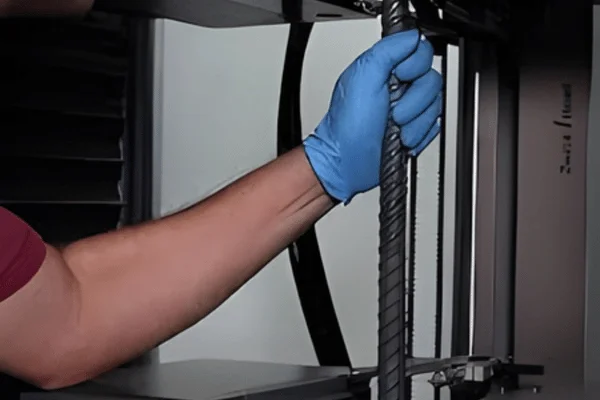
During this procedure, a steel specimen is placed inside a Universal Testing Machine (UTM). The machine applies increasing tensile force until the steel reaches its breaking point.
Tensile strength results help engineers determine whether steel reinforcement can safely carry structural loads under actual service conditions.
Reinforced Steel Bar Testing involving tensile evaluation is critical for high-rise buildings, bridges, industrial facilities, and infrastructure projects where structural reliability remains essential.
Yield Strength Testing
Yield strength testing determines the stress level at which steel begins permanent deformation.
Before reaching yield strength, steel returns to its original shape after the removal of applied force. Beyond the yield point, permanent deformation occurs.
Yield strength values are important because they indicate the load-carrying capability of reinforcing steel under working conditions.
Reinforced Steel Bar Testing confirms whether steel reinforcement satisfies minimum yield strength requirements specified by project engineers and construction standards.
Elongation Testing
Elongation testing measures how much a steel bar stretches before breaking.
This test evaluates ductility, which refers to the ability of steel to deform without sudden failure.
High ductility remains especially important for structures located within earthquake-prone regions. Steel reinforcement with adequate elongation properties can absorb and dissipate seismic energy more effectively.
Reinforced Steel Bar Testing involving elongation analysis helps engineers assess structural resilience and material flexibility.
Bend and Re-Bend Testing
Bend testing evaluates the ability of reinforcing steel bars to withstand bending without cracking or fracturing.
During the test, steel bars are bent to specified angles under controlled conditions. Re-bend testing may also be performed to assess performance after aging or exposure.
These procedures help identify brittle or defective steel materials unsuitable for construction use.
Reinforced Steel Bar Testing through bend evaluation supports fabrication quality control and installation reliability.
Equipment Used for Reinforced Steel Bar Testing
Modern Reinforced Steel Bar Testing requires specialized laboratory equipment capable of delivering accurate and repeatable results.
Universal Testing Machine (UTM)
The Universal Testing Machine serves as the primary equipment used for tensile and yield strength testing.
UTMs apply controlled mechanical force to steel specimens while recording:
- Applied load
- Elongation
- Stress levels
- Failure points
Calibrated testing equipment ensures reliable data and accurate evaluation of steel performance.
Measuring Devices
Precision measuring instruments are used to determine:
- Diameter
- Length
- Cross-sectional area
- Deformation measurements
These measurements support accurate calculation of mechanical properties during Reinforced Steel Bar Testing.
Sample Preparation Tools
Proper sample preparation remains essential for valid test results. Cutting and specimen preparation tools help ensure consistency throughout testing procedures.
Process of Reinforced Steel Bar Testing
Reinforced Steel Bar Testing follows a systematic procedure to maintain consistency, reliability, and compliance with testing standards.
Sample Collection
Steel bar samples are collected from project sites, suppliers, or delivery batches.
Representative sampling helps ensure accurate evaluation of delivered materials.
Sample Identification
Each specimen receives proper identification and documentation before testing.
Laboratory personnel record:
- Bar size
- Grade
- Heat number
- Supplier details
- Project information
Laboratory Testing
Mechanical tests are conducted using calibrated equipment according to ASTM A370 procedures.
Each test follows controlled laboratory conditions to maintain accuracy and consistency.
Data Analysis
Test results are analyzed and compared with specified engineering requirements and applicable standards.
Reporting
Certified laboratory reports are issued after completion of testing.
Reports typically include:
- Yield strength values
- Tensile strength results
- Elongation percentages
- Pass/fail evaluation
- Testing standards used
- Laboratory certification details
Fast reporting supports construction schedules by allowing contractors to clear materials for use without unnecessary delays.
Common Problems Identified Through Reinforced Steel Bar Testing
Reinforced Steel Bar Testing helps identify material defects and quality issues that may compromise structural performance.
Low Tensile Strength
Steel bars with insufficient tensile strength may fail under heavy structural loading.
Inadequate Yield Strength
Failure to meet specified yield strength requirements can reduce overall structural capacity.
Poor Ductility
Steel materials with low elongation values may crack or fail suddenly during seismic activity.
Surface Defects
Visible defects such as cracks, corrosion, or manufacturing irregularities can weaken reinforcement performance.
Incorrect Bar Size
Undersized steel bars provide less reinforcement area than required by design specifications.
Non-Compliance with Mill Certificates
Testing may reveal discrepancies between actual material properties and supplier documentation.
Through Reinforced Steel Bar Testing, these problems can be detected early before materials are incorporated into structural components.
Role of Accredited Laboratories in Reinforced Steel Bar Testing
Accredited laboratories play an important role in maintaining quality assurance across construction projects.
Independent testing laboratories provide objective evaluation of steel materials using recognized testing standards and calibrated equipment.
Inch-On Materials Testing Laboratory is a DPWH-BRS accredited Engineering and Construction Laboratory established in November 2018. The laboratory specializes in testing soil, concrete, steel, and other construction materials while following ASTM and AASHTO testing standards.
Reliable Reinforced Steel Bar Testing performed by accredited laboratories supports:
- Construction quality control
- Engineering verification
- Regulatory compliance
- Structural safety
- Contractor accountability
- Material certification
Accredited laboratories also help project owners and contractors reduce risks associated with material failure and construction defects.
Reinforced Steel Bar Testing for Seismic Safety
Seismic activity places extreme demands on reinforced concrete structures. During earthquakes, structures experience dynamic forces that cause bending, vibration, and deformation.
Reinforced Steel Bar Testing evaluates whether steel reinforcement possesses adequate ductility and flexibility to withstand these conditions.
Steel bars with sufficient elongation properties can absorb seismic energy without sudden fracture. This behavior improves structural resilience and reduces the likelihood of catastrophic collapse.
Construction projects located within earthquake-prone regions often require strict quality control for reinforcing steel materials. Reinforced Steel Bar Testing supports compliance with seismic design requirements and engineering safety standards.
Benefits of Reinforced Steel Bar Testing
Reinforced Steel Bar Testing provides several important advantages for construction projects and infrastructure development.
Improved Structural Reliability
Testing confirms that reinforcement materials meet required mechanical properties for safe structural performance.
Enhanced Safety
Proper quality verification reduces the possibility of material failure during construction and occupancy.
Reduced Construction Risks
Early detection of substandard steel materials prevents costly project delays, demolition work, and repairs.
Compliance with Standards
Reinforced Steel Bar Testing supports compliance with ASTM, AASHTO, and DPWH standards.
Better Project Quality Control
Reliable testing results help contractors maintain consistent material quality throughout project execution.
Increased Confidence for Stakeholders
Certified laboratory reports provide assurance for engineers, developers, consultants, contractors, and project owners.
Why Choose Inch-On Materials Testing Laboratory?
Inch-On Materials Testing Laboratory provides professional Reinforced Steel Bar Testing services backed by industry-standard procedures and accredited laboratory operations.
The laboratory offers:
- ASTM A370 compliant testing
- Calibrated Universal Testing Machines
- Certified laboratory reports
- Fast turnaround time
- Experienced technical personnel
- Reliable quality assurance services
As an independent DPWH-BRS accredited Engineering and Construction Laboratory, Inch-On supports construction projects through accurate and dependable material testing services.
Testing services help ensure that reinforcing steel bars meet project requirements before installation, supporting structural safety and long-term durability.
Takeaway
Reinforced Steel Bar Testing remains an essential component of construction quality assurance. Structural safety depends heavily on the strength, ductility, and reliability of reinforcing steel embedded within concrete structures.
Through proper testing procedures based on ASTM A370 standards, engineers and contractors can verify that steel materials meet required specifications and perform safely under real-world conditions.
Reinforced Steel Bar Testing supports compliance with construction standards, improves structural reliability, and reduces risks associated with substandard materials.
At Inch-On Materials Testing Laboratory, accurate and reliable testing services help support safer construction projects through professional laboratory evaluation and certified reporting.
Frequently Asked Questions (FAQ)
What is Reinforced Steel Bar Testing?
Reinforced Steel Bar Testing refers to the mechanical evaluation of steel reinforcement materials used in construction. Testing measures properties such as tensile strength, yield strength, elongation, and ductility.
Why is Reinforced Steel Bar Testing important?
Reinforced Steel Bar Testing helps verify structural safety, material quality, and compliance with engineering standards before steel materials are used in construction projects.
What standard is used for Reinforced Steel Bar Testing?
ASTM A370 serves as the primary standard for mechanical testing of steel products, including reinforcing steel bars.
What equipment is used during Reinforced Steel Bar Testing?
Universal Testing Machines (UTM) are commonly used to evaluate tensile strength, yield strength, and elongation properties of reinforcing steel bars.
Why is ductility important for reinforcing steel?
Ductility allows steel reinforcement to deform under stress without sudden failure. This property is especially important for earthquake-resistant structures.
How long does Reinforced Steel Bar Testing take?
Testing duration depends on sample quantity and laboratory workload. Many accredited laboratories provide results within a short turnaround period to support construction schedules.
What happens if steel bars fail testing?
Steel materials that fail Reinforced Steel Bar Testing may require replacement, rejection, or further evaluation before use in construction.
Why choose an accredited testing laboratory?
Accredited laboratories follow recognized testing standards and maintain calibrated equipment, helping ensure accurate and reliable test results.